 VapeWholesaleHub
Common Cartridge Mistakes New Distributors Make — Specialist Vape Shops
A cartridge programme fails in predictable ways: a specification nobody wrote down, a sample nobody retained, and a lead time nobody stress tested. Here is how to close those three gaps before they cost you a container.
The Specification That Matters
When we write a cartridge specification with a distributor, we fix four things first: the resistance band, the liquid capacity tolerance, the puff count methodology and the packaging master carton. Everything else can flex without changing the customer experience.
| Product category | Pod system |
|---|---|
| Resistance band | 1.2 - 1.4 ohm |
| Capacity tolerance | +/- 5% |
| Puff count method | Declared by capacity |
| Master carton | 100 units |
| Carton weight | 11.0 kg |
| Shelf life | 18 months |
| Storage | 15-25 C, dry, away from direct light |
Where Demand Is Heading
One visible change in cartridge is the move towards clearer labelling and traceability. Retailers who adopted batch coding early are finding it much easier to work with larger distributors now.
Quality Control in Practice
Train whoever receives cartridge cartons to note anything unusual at the point of unloading. Damage discovered at the dock is a freight claim; damage discovered a week later is your problem.
Set the cartridge complaint threshold in the contract before you need it. Deciding what counts as an acceptable defect rate during a dispute is the worst possible time to negotiate it.
- Ask how the factory measures puff count, then compare like with like.
- Start with a mixed carton and let your own sell-through decide.
- Check carton dimensions against your freight quote before confirming.
- Rotate stock by batch code rather than by delivery date.
- Agree the tolerance band in writing before approving artwork.
Where Cartridge Sits in the Range
Category planning for cartridge works best when you map it against three shopper types: the restocker who already knows what they want, the switcher who wants something stronger, and the explorer who buys on flavour name alone.
Decide early whether cartridge is a traffic driver or a margin line in your store. The answer changes how you price it, where you place it and how hard you push it at the counter.
What Cartridge Really Costs Landed
Margin on cartridge is rarely lost at the till. It is lost through dead stock, returns and emergency air freight. A slightly higher landed cost with predictable lead time usually beats the cheapest quote on the spreadsheet.
Indicative reference points for planning purposes: entry tier from USD 1.14 per unit at 500 units, mid tier at USD 1.37, and volume tier at USD 0.97 for full container quantities. These figures move with specification, packaging and freight, so treat them as a shape rather than a quote.
Logistics That Protect Margin
Plan the cartridge customs paperwork at the same time as the order, not when the goods are on the water. A missing document costs more in demurrage than the entire freight saving from a cheap forwarder.
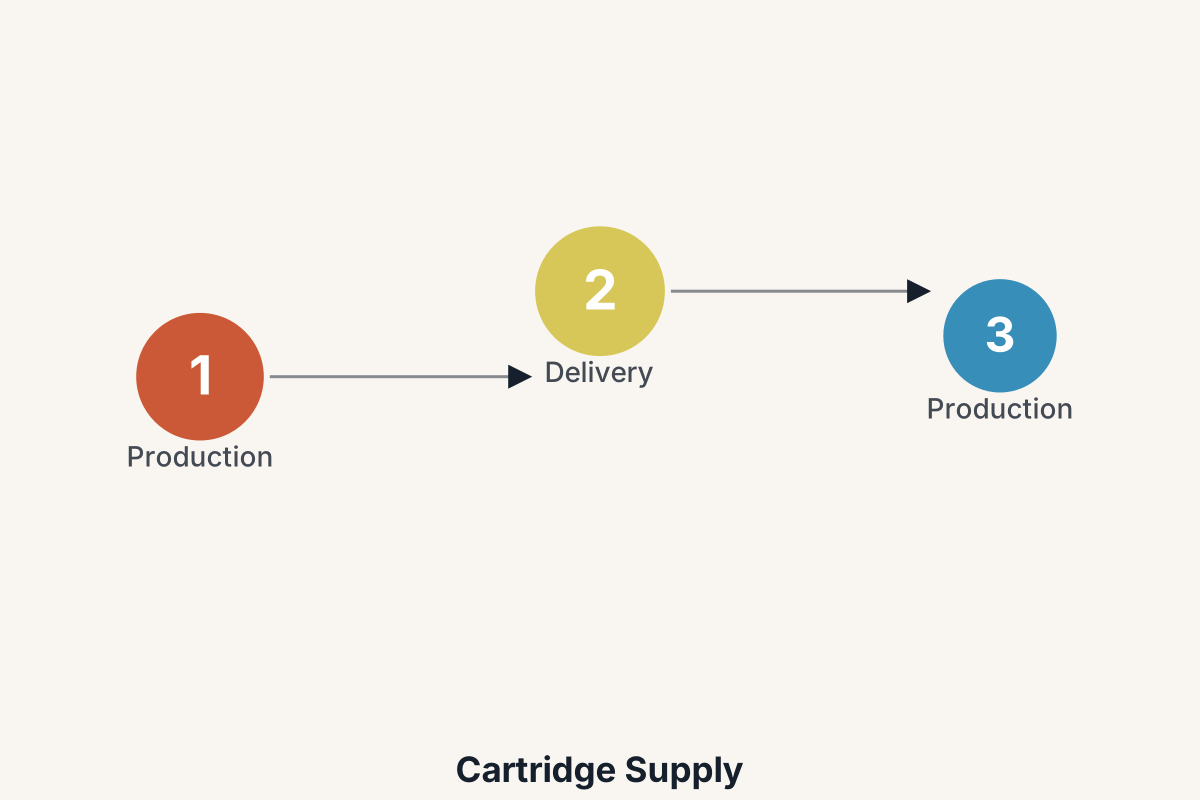
Air freight makes sense for a first cartridge order when you need to test demand quickly, but almost every steady programme moves to sea freight once volumes stabilise. Planning that switch early avoids a painful margin squeeze later.
Practical Checklist
- Start with a mixed carton and let your own sell-through decide.
- Model landed cost, not ex-works price, when comparing quotes.
- Agree the tolerance band in writing before approving artwork.
- Plan the switch from air to sea freight before you need it.
- Keep sealed retained samples from every production batch.
- Confirm the current customs classification with your own broker.
Frequently Asked Questions
Can I visit the production facility?
Yes, and we encourage it for larger programmes. Visits are most useful when you already have a draft specification, because you can then check the specific processes behind the numbers you care about.
What if a batch does not match the sample?
Keep the retained samples from the approval stage. If a delivered batch measurably differs, we compare against the retained set and resolve it against the production record. This is why we insist on sealed retained units from every run.
Can you match an existing product I already sell?
Often yes, provided we can measure it properly. Send a physical sample and we will report back on what can be matched, what will differ slightly, and why. An honest gap is more useful than a vague promise.
Do you provide compliance documents?
Every shipment leaves with the documentation set relevant to your market, including batch records and test reports where required. Your local rules still determine what you must file, so confirm those with your broker before import.
Next Step
Nobody wins when a first order is too large to learn from. Start with a mixed carton, check how it moves in your own market, then scale the lines that earned the shelf space.
Related Reading
- Cartridge Emissions and Leak Testing Methods — Freight Included
- Cartridge Storage Life Extension Through Better Handling — Retail Chains
- Cartridge Sampling Programme: How to Evaluate Before You Commit — Before Your Next Order
- Cartridge Approval Workflow From Sample to Shipment — Small Batch Buyers
- Cartridge When to Add a Second Factory — Plain Language
- Cartridge Trade Credit and Account Terms — Mixed Cabinets